Intergenerational Approach to Sexual Reproductive Health and Rights/HIV in Shurugwi District, Mupangayi Secondary School.
PROJECT TITLE: SUPPORTING HEALTH, HUMAN RIGHTS AND QUALITY OF LIFE FOR ADOLESCENT GIRLS AND BOYS THROUGH SRHR AND HIV SERVICE INTEGRATION IN SHURUGWI, ZIMBABWE.
BACKGROUND:
Access to SRHR products and services remain low amongst adolescents’ girls and boys in Zimbabwe and this has negative impacts on the fight against HIV/AIDS in line with the 95-95-95 targets. Guttmacher Institute (2014) found that many obstacles prevent young Zimbabweans from acting on their desire to postpone parenthood and stay HIV-free – as is in line with WICO Zimbabwe survey in Shurugwi. Protecting adolescents from unintended pregnancy and HIV infection will be critical if Zimbabwe is to fulfil its long-term economic development goals. Supporting adolescents’ and young women’s needs will also bring the country closer to achieving the SDGs.
SRHR remains a critical issue across generations with different perspectives and experiences often creating a gap between older and younger individuals. This case study explores the situations and experiences that the gap between parents and learners of Mupangayi Secondary school in Shurugwi, Tongogara Rural District Council.
The school is Headed by Mr Nyoni, who has a staff compliment of 23 teachers (16 female and 7 male). The school has a learner population of 453 learners aged between 13 and 19 years in Form 1 to form 4. It also has 3 children with varying disabilities from physical disabilities to intellectual disabilities. The learners also live with parents or guardians aged 40 years and above.
WICO Zimbabwe, through a grant from Gender Links, implemented a number of health education sessions with the learners. They also formed health clubs and established learner friendly SRHR information hubs to help them access information that is age appropriate and critical for their sexual reproductive health knowledge. WICO Zimbabwe also trained peer educators comprising of the school prefects’ body to allow them to instil a culture of self-care and discipline among their peers, a gesture that was well received by the school authorities. WICO Zimbabwe went on to train the school health masters focusing on the creation of a stigma free environment at the school. It is through these programs that issues of generational gaps arose and WICO Zimbabwe sought to foster intergenerational dialogues, knowledge sharing and collaboration to improve SRHR/HIV outcomes and address the unique needs of the learners and their parents and guardians.
This was done through a series of workshops, where, through assistance of the Head, parents and guardians were invited to join the learners for combined dialogue sessions.
BELOW ARE SOME OF THE SCENARIOS FOR REFERENCE:
CASE 1
Tendai Nyoni (name changed for the child’s protection), is a Form 4 girl who leaves with both parents. She is a fairly good student whose grades are always above average. She gets all the support from her parents in terms of school resources. Recently she asked for a cell phone to help her conduct further research as she studied. The parents were reluctant at first but succumbed to Tendai’s persistence and bought her the phone as she claimed that her performance would go below that of others who already had phones. They later noticed that she spent more and more time on the phone and even put a password that no one else would access her phone. This bothered the parents a lot and created some friction between them and Tendai. She became very secretive about a lot of things around her which really got the parents worrying.
CASE 2
Brian Zimuto (name changed for the child’s protection), is a boy in Form 4 who lives with his uncle as both parents are working in South Africa. They are very supportive of their son and buy him trendy clothes and gadgets. The uncle and aunt disapprove this and had a lot that they were not very happy with. After school Brian frequents the very busy township and hangs around with older out of school boys who seem to influence his behaviour a lot. The parents allow him some pocket money and so can afford drinks as much as the older boys who make their money from artisanal mining. His grades were also dropping and his behaviour is now synonymous with alcohol and substance abuse.
CASE 3
Chipo Chizana (name changed for the child’s protection) is a Form 3 girl who lives with her maternal grandmother. She did not complete her O’level the first time because she fell pregnant and eloped with her young boyfriend. The union did not work out and she soon returned home to her grandmother. The school allowed her to return to school and re-enter the system as a Form 3 student. The school policy allows for such students to get a second chance to complete their education. She is keen to work harder and better but she faces ridicule and stigma from other learners who do not seem to understand he demise.
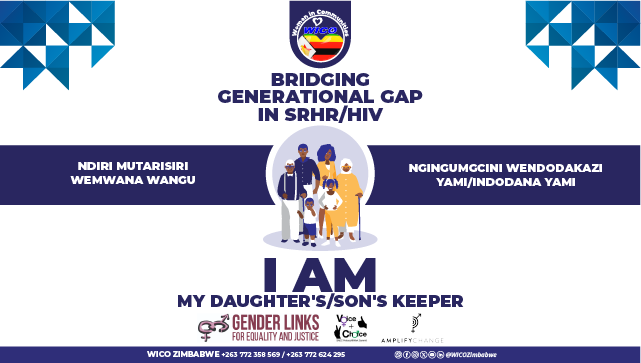
I AM MY DAUGHTER/SON’S KEEPER campaign helped address these and other cases that have created misunderstanding between children and their parents/guardians. It allowed the parents to express their fears and concerns regarding their children while at the same time the learners also felt they were not understood. The parents always seemed to think of all the negative things that may happen to their children. Debates ensued and when the time for one-on-one discussions, there was a mutual understanding and appreciation of either’s viewpoints. The idea was that the parent must be keen to know what is going on with their child at all times, more for their protection than for blaming them. Dialogue, knowledge sharing and collaboration helped to improve SRHR/HIV outcomes and addressed the unique need of the two groups. Issues of menstrual hygiene were taboo for a father to discuss with a daughter. Boys emulated their fathers drinking habits as normal and adopted bad practices as a result.
“Today we learnt a lot about bridging the gap between parents and children. We realised that we need to communicate better with our children by being more open with them all the time. This helps prevent them from seeking help elsewhere which may be misleading. The use of phones was discussed at length but resolved that learner should focus on making the best use of the technology and not abuse it.” Said Mrs
“I am a learner at Mupangayi secondary school in Ward 11 of Shurugwi district. Today we had a visit from WICO Zimbabwe who took us through ways of improving communication between us and our parents. This may be academic problems or social problems like abuse and negative peer pressure. We need to accept guidance from our parents and guardians as they have our best interests at heart. We are very grateful for the opportunity for dialogue with our parents.”
OUTCOMES
- There was increased knowledge and understanding of SRHR issues between learners and the elders
- Improved communication and relationships
- Empowered learners who will take ownership of their SRHR
- Increased support from the older generation and appreciation of the changes overtime.
- Trust issues between the young and older resolved
CONCLUSION
Adolescents and young people can only make healthy choices if they have
- easy access to accurate information about sexuality that is in line with their needs and circumstances not always regulated or imposed on them
- are able to translate this to changes in attitude and behaviour, accepted by their elders.
- have full access to SRH/HIV commodities and services with which they can prevent unwanted pregnancies and STI’s and are not judged or stigmatized by the older generation.
- live in an enabling environment without legal barriers (e.g., age of consent) or implementation barriers (facilities, staff attitudes, availability of appropriate commodities AND utmost support from their own parents and guardians.
Great article! I really appreciate the clear and detailed insights you’ve provided on this topic. It’s always refreshing to read content that breaks things down so well, making it easy for readers to grasp even complex ideas. I also found the practical tips you’ve shared to be very helpful. Looking forward to more informative posts like this! Keep up the good work!
Thank you so much for visiting our website. We appreciate your comments and the encouragement. We will continue to try harder and reach more people.
Rebecca